

Transition to electric vehicles in Ukraine is inevitable: how to save up to 40% and survive the fuel crisis
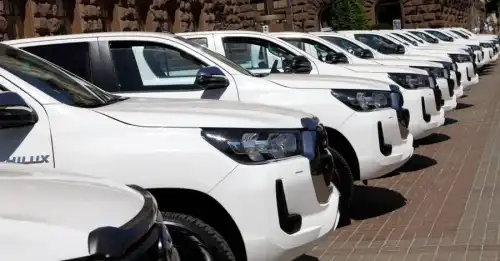
Photo: Kirill Chubotin / Ukrinform/Future Publishing via Getty Images
The rising prices of gasoline and diesel against the backdrop of the Middle East crisis are turning every kilometer into a luxury. Under these conditions, an electric vehicle in Ukraine is definitively ceasing to be a fashionable “gadget”.
Why the shift to “electrics” can no longer be stopped, on which models you can now save up to 40%, and how a car can replace a generator for an entire house, Kratko pro was told by expert in electric vehicles, founder of the first Ukrainian website about electric vehicles autogeek.com.ua, Yevhen Mudzhyri.
Demand for electric vehicles has become more rational
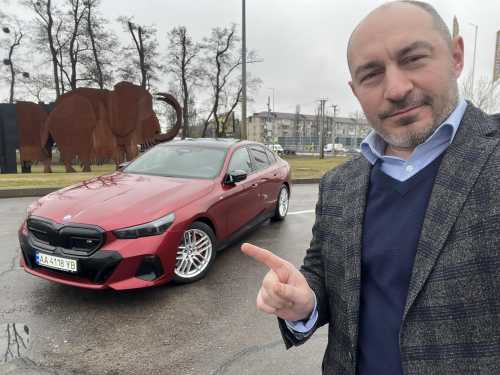
Yevhen Mudzhyri, expert in electric vehicles. Photo: FB Yevhen Mudzhyri
– The war in Iran continues, which means the energy crisis will deepen. How is the automotive market reacting to this? Is the structure of demand changing?
– Global instability always impacts logistics and oil product prices. The Ukrainian market is currently showing a “pendulum effect”. On one hand, rising fuel costs are forcing drivers to think about savings. On the other hand, people in the car market have become more cautious due to the return of taxes (abolition of import benefits) from January 1, 2026. We see that demand has become more rational: customers have stopped buying “emotionally” and have started calculating the cost of owning a car for 3–5 years in advance.
– If the energy crisis caused by the war in the Persian Gulf is indeed long-term, will Ukrainians switch to electric vehicles?
– The process is already irreversible. An electric vehicle in Ukraine has ceased to be an “entertainment gadget” (except for some premium-class models); it has become a fully-fledged tool for survival and autonomy. Even with high electricity tariffs, the cost per kilometer on electricity remains several times lower than gasoline or diesel. The crisis only accelerates this transition because an electric vehicle provides what a car with an internal combustion engine cannot – diversification of energy sources. You cannot “brew” gasoline at home, but you can get energy from the sun or store it at night.
– Is there currently more demand for new electric vehicles or used ones?
– Definitely for used ones. In 2026, a huge number of cars after 2–3 year leases (models 2023–2024) will enter the European and US markets. This is a “golden era” for Ukrainian buyers: you can get a technologically fresh Tesla Model Y or VW ID.4 with a 30–40% discount on the price of a new one. New cars are now bought by businesses or the premium segment, where warranty and status are valued.
Moreover, we are seeing a clear shift in interest towards pragmatism. If previously the top inquiries were dominated by reviews of futuristic novelties or Teslas, now people are interested in “mathematics”: real winter range, the degradation rate of batteries for specific models, and the cost of maintenance after 100,000 km of mileage. We also record huge interest in home energy storage systems that can be integrated with electric vehicles. People want to know how their car can become part of a home’s autonomous energy system.
A modern electric vehicle can power a house for 2–4 days
– Is the capital’s infrastructure ready for the influx of electric vehicles?
– Kyiv is considered a leader in this regard, but the infrastructure is developing at a catching-up pace. The main problem is not the number of “charging stations,” but the available network capacity. Commercial operators are actively installing ultra-fast hubs (150+ kW), where you can charge in 20 minutes. However, old residential areas, where apartment building residents cannot charge at night, remain a “bottleneck.” An extension cord from a window is not a solution. The future lies in large charging hubs at city entrances and near shopping malls.
– Could a deficit of electricity become a deterrent to switching to “electrics”?
– It sounds paradoxical, but a deficit of electricity often becomes a stimulus, not an obstacle. When there is a fuel crisis in the country, queues at gas stations are more frightening than power outage schedules. EV owners have learned to adapt: charging in the “gray” zones of schedules or using fast stations with powerful buffer storage systems (Battery Storage) that work even during blackouts.
– Are there technical solutions that make an electric vehicle owner more or less independent of electricity shortages? For example, having your own charging station at home.
– When I’m asked what to pay attention to when buying an electric vehicle, the answer is always the same: start from where you will charge it. Your own outlet in a private house is also an option, but today we are talking about broader solutions:
- V2H (Vehicle-to-Home): this is a technology where the car becomes a giant “power bank” for your home. A modern electric vehicle can power a household for 2–4 days.
- Home SES: solar panels on the roof allow you to charge your car completely for free and autonomously.
- “Smart” chargers: they automatically start charging the car as soon as there is voltage in the network, “squeezing” the maximum out of the available time.
– Should the state start stimulating the transition to electric vehicles?
– The state has already done a lot by maintaining zero VAT for years. Now, when benefits are canceled (from 2026), the focus should shift from “purchase incentives” to “infrastructure incentives.” Simplified conditions are needed for connecting charging stations to the grids and preferential lending for businesses installing high-speed chargers. The development of a network of charging points on intercity highways is also critically important so that an electric vehicle is not limited only to the city.
However, if such benefits are genuinely discussed, I am ready to support their implementation. This is not only about ecology or driver comfort, but about the survival of the economy. Every liter of gasoline or diesel is an imported product, for which we pay with currency, draining it from the country. The transition to electric vehicles significantly improves Ukraine’s trade balance. We are replacing imported fuel with our own electricity, generated by our nuclear power plants and renewable sources. Thus, the money that a driver spends on “refueling” stays within the country, works for our energy sector, and supports the hryvnia. This is a matter of national economic security.
Another opinion
The future belongs to electric bicycles
– The transport infrastructure of the capital is overloaded. According to various estimates, Kyiv is designed for approximately 500,000 active cars, while the actual number is significantly larger. This creates common problems, regardless of the type of engine, – says transport planning expert Dmytro Bespalov.
According to the expert, the state should not stimulate motorization at all. It is better to take the experience of European countries as an example in this matter.
– Instead, efforts should be focused on developing public transport, cycling infrastructure, and alternative modes of mobility. It should be noted that in many European countries, these directions demonstrate effectiveness. For example, electric bicycles are one of the most energy-efficient modes of transport, – notes Dmytro Bespalov.
An electric bicycle could be a great solution, if not for one, but very important “but” – the cycling infrastructure, which we almost don’t have. Although conversations about it have been ongoing for about ten years. At the same time, the range of travel is a limiting factor – many residents of Kyiv suburbs have to cover 30–50 km a day, which is harder on a bicycle than in a car.