

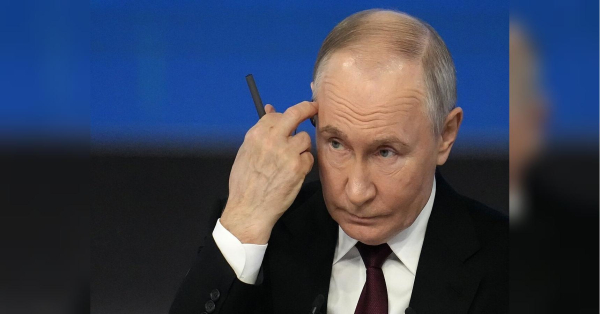
Russian leader Putin is anticipating a winter offensive. However, Ukraine is currently showcasing its best battlefield performance in recent years, while Russia’s expenditures are rapidly increasing and its military successes are diminishing. Concurrently, experts urge caution with this optimism. This is according to a Bloomberg report.
VIDEO OF THE DAY
The publication notes that the key questions remain regarding the duration of Ukraine’s current advantage and the potential actions of Russian President Vladimir Putin, who finds himself under pressure from the war.
Following the failure of Ukraine’s 2023 counteroffensive, hostilities, according to the authors’ assessment, have entered an attritional phase: Russia is gradually advancing in certain areas of the front, relying on its numerical and economic resources. Simultaneously, the pace of this advancement remains slow, and losses are exceptionally high.
Shift in Dynamics in 2026
According to the material, 2026 became a period when the pace of the Russian troops’ offensive slowed down even further, but the level of losses remains significant—averaging around 35,000 military personnel monthly killed, wounded, or missing in action.
ADVERTISING
Analysts attribute the change in the situation primarily to the development of Ukrainian drone technologies. Drone development cycles have shortened from years to weeks, and the widespread use of UAVs along the front line creates a constant zone of engagement for Russian troops, hindering movement and force buildup.
It is separately noted that Ukraine is actively employing medium-range drones capable of striking logistics over 150 kilometers from the front. This significantly complicates the supply of Russian units.
The material also mentions that Ukrainian drone strikes have impacted the functioning of Russian infrastructure and public events, specifically making it difficult to conduct certain activities in Russia and causing damage to the oil refining sector.
ADVERTISING
Impact on Russia’s Economy
Citing The Economist, the authors note that in the spring, the processing volumes at Russian oil refineries were approximately 15% lower than a year earlier.
Furthermore, Russia’s monthly losses on the front, according to estimates, now equal or exceed the rate of personnel replenishment. Dissatisfaction is also growing among the elites in the country, and the war economy is facing increasing strain.
The political factor is also mentioned separately: the defeat of Hungarian Prime Minister Viktor Orbán in the elections, according to the material’s assessment, weakened Russia’s position in Europe and reduced the number of its influential allies in the EU.
Prospects and Risks
Despite positive trends for Ukraine, the material emphasizes that this does not guarantee a swift victory. Ukraine still does not control significant occupied territories in the east.
ADVERTISING
The authors suggest that if Russia’s forces and economy continue to be depleted, conditions for a ceasefire along the current front line may emerge by the end of the year. Such a scenario could give Ukraine time to recover and deepen its integration with the West, particularly in the defense technology sector.
At the same time, the uncertainty is highlighted regarding whether Ukraine’s current advantage in the drone sphere is systemic or temporary. Russia, according to assessments, is adapting its tactics and increasing its production of drones and armaments.
Escalation Risks
The material also addresses the risk of further escalation from Russia, which continues to combine military pressure with hybrid influence methods and nuclear rhetoric.
Incidents are mentioned, including the strike by a Russian UAV on the territory of Romania—a NATO member—as well as the growing threats to the Baltic countries.
Analysts suggest that the Kremlin might use tactics of limited escalation to pressure Western countries and attempt to weaken support for Ukraine.
Concurrently, the material stresses that despite the risks of large-scale escalation, the Russian army is not demonstrating readiness for a global conflict.
The authors conclude that the war currently unfolding remains unpredictable, and its final phase could prove even more dangerous than the current stage.
Earlier, the Institute for the Study of War revealed the reasons behind Russian President’s reluctance to end the war in Ukraine.